






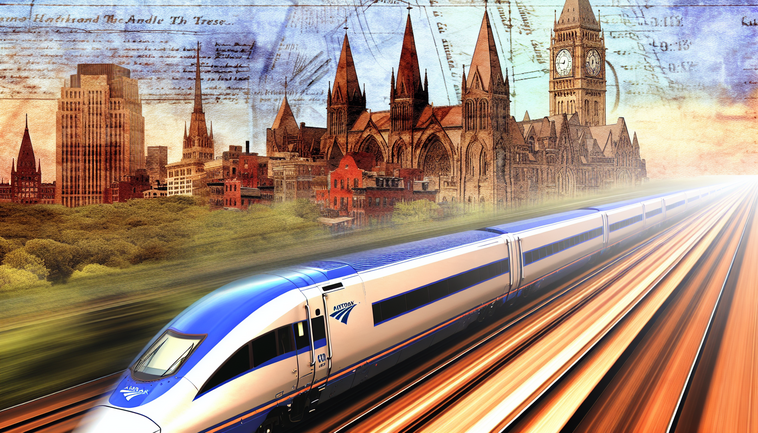
The American Northeast has long been a tapestry of rich history interwoven with bustling modernity, and now, thanks to Amtrak’s latest offering, it’s speeding into the future at a remarkable 160 miles per hour. The debut of the NextGen Acela train marks a significant milestone in intercity travel, promising to transform the way residents and tourists alike traverse the densely populated corridor stretching from Boston to Washington, D.C.
Among the first to experience this leap into high-speed rail was Leo Friedman and his mother, Phyllis, who embarked on a memorable journey from New Jersey simply to witness the inaugural ride to Washington, D.C. Their adventure underscores the unique allure and excitement surrounding this new era of train travel. It’s more than just a journey; it’s an experience, combined with the thrill of being part of a pioneering milestone in transportation.
While the notion of high-speed trains isn’t new to world travelers accustomed to the likes of Japan’s Shinkansen or France’s TGV, in the United States, where car culture has reigned supreme, this development signifies a transformative shift. As cities become increasingly congested and climate change demands smarter transport solutions, developments like the NextGen Acela offer a glimpse into a sustainable future.
The NextGen Acela trains are not merely fast; they symbolize efficiency and comfort. These trains are designed with enhanced features such as improved seating, higher capacity, and modern amenities, contributing to a seamless travel experience. For business commuters and leisure travelers alike, the prospect of shaving precious time off their journeys while enjoying state-of-the-art facilities is nothing short of game-changing.
Economically, the implications of this high-speed rail line are profound. By creating faster and more convenient access between major economic hubs, Amtrak’s new service could boost regional business travel, enhance tourism, and even influence real estate markets by making further cities viable options for commuters.
From an environmental standpoint, increased train travel is a positive step toward reducing carbon footprints. Trains are inherently more efficient compared to cars or planes, and with this initiative, Amtrak may successfully lure travelers away from less sustainable modes of transportation, contributing to national and global efforts to address climate change.
Ultimately, the introduction of the NextGen Acela represents more than just a technical upgrade in rail transportation; it’s a signal that the U.S. is ready to embrace future solutions in infrastructure. This high-speed option not only brings the physical locations of Boston, New York, and Washington, D.C. closer together but also serves as a symbol of potential nationwide advancements in transport. As more travelers like Leo and Phyllis opt for this new service, we can anticipate a ripple effect, leading to expanded high-speed rail networks across the country and a redefined landscape of American travel.