






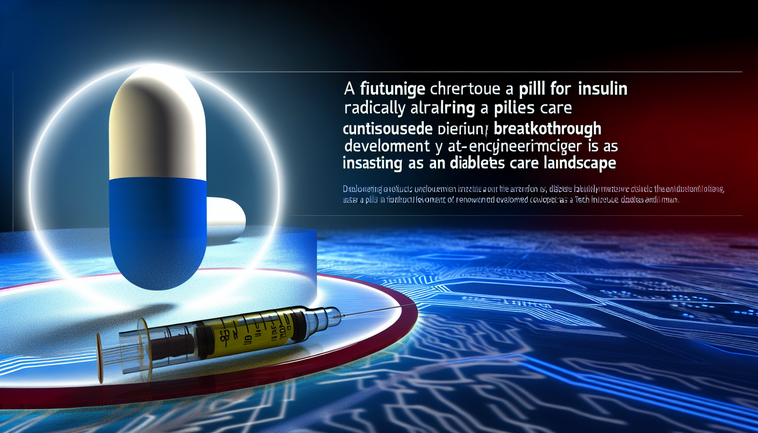
In a groundbreaking development, engineers at Georgia Tech have unveiled a promising innovation that could change the face of diabetes treatment. Imagine a future where managing insulin levels is as simple as swallowing a pill. This new approach stands to revolutionize the way millions of people with diabetes manage their condition, replacing the inconvenient and often painful needle injections of today.
Delivering insulin via a pill has been a long-standing challenge, primarily because of the digestive system’s natural defenses and the hormone’s sensitivity. Insulin, a protein, is typically broken down by stomach acids long before it reaches its target. However, Georgia Tech’s novel solution promises to transport insulin safely through the stomach and into the bloodstream, maintaining its effectiveness throughout the journey.
This innovation isn’t just about convenience. By simplifying the delivery method of insulin and other injectable medications, this pill could potentially reduce costs. When patients can manage their conditions more easily and independently, it lessens their reliance on costly healthcare services and reduces the overall economic burden of chronic disease management.
The potential benefits extend beyond diabetes. This delivery technology could be adapted for other biologics and injectables used in chronic conditions, such as rheumatoid arthritis and Crohn’s disease. Such versatility highlights the solution’s potential to improve adherence to medication regimens, further enhancing patient outcomes and quality of life.
One of the most compelling aspects of this development is the potential improvement in patients’ quality of life. Those with a needle phobia or those who simply dislike the frequent injections will find significant relief. Additionally, simplifying the administration process may improve compliance, which is crucial for maintaining stable health in patients with diabetes.
However, there are challenges to address before this pill becomes mainstream. Extensive clinical trials will be essential to ensure its safety, efficacy, and reliability across diverse populations. Regulatory approval processes can be lengthy, but the potential benefits may encourage expedited evaluations by health authorities.
In conclusion, Georgia Tech’s breakthrough is a beacon of hope for individuals grappling with daily injections. It signals a future where insulin management is less invasive, more accessible, and potentially more cost-effective. As this technology progresses, it holds the promise not only to transform diabetes care but also to enhance the lives of those managing other chronic illnesses. A future where treatment aligns more closely with the needs and comforts of patients is indeed within reach.