






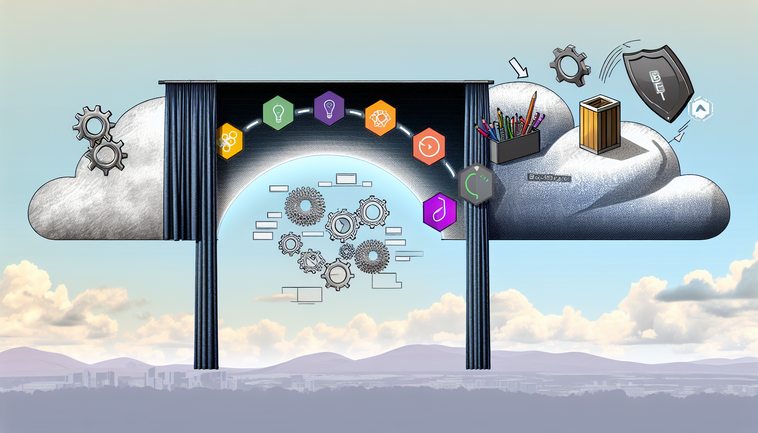
Beyond the Curtain: The Expanding Horizon of Platform Engineering in DevOps
In the dynamic world of software development, platform engineering is steadily emerging as an essential pillar supporting DevOps initiatives. While tools like Backstage have become synonymous with centralized development platforms, the real narrative extends far beyond any single application. Platform engineering encapsulates a broader range of strategies and methodologies designed to streamline development processes, enhance collaboration, and ultimately drive innovation.
As organizations seek to scale their software delivery, reliance on robust platform engineering practices can significantly reduce complexity. It’s not just about having a collection of tools; it’s about creating a cohesive environment where developers can thrive. By smoothing over the technical wrinkles that often slow down development cycles, platform engineering allows teams to focus more on creative and value-driven work.
A key aspect of platform engineering is its ability to unify disparate systems into an ecosystem that simplifies infrastructure management and application deployment. This consolidation not only aids in maintaining consistency across environments but also empowers developers to accelerate deployment times with confidence. Such efficiency is critical in the agile landscape, where businesses must adapt rapidly to shifting market demands.
Industry experts emphasize that the role of platform engineering is deeply intertwined with the foundational principles of DevOps. It fosters a culture where automation, collaboration, and continuous improvement become second nature. By integrating these elements, platform engineering essentially acts as the backbone of DevOps, facilitating smoother transitions from development to operation.
The true power of platform engineering lies in its capacity to drive autonomy and innovation among development teams. Empowered with reliable self-service capabilities, developers can experiment and deploy new features quickly and safely. This empowerment not only boosts team morale but also leads to a more dynamic technological ecosystem, where novel ideas can be implemented and tested without procedural bottlenecks.
Moreover, platform engineering serves as a bridge connecting siloed departments within an organization, enabling a more open channel of communication and collaboration. It’s about creating an environment where information flows freely and insights are shared readily, magnifying collective expertise and fostering a spirit of mutual growth.
In conclusion, while Backstage represents the face of modern platform engineering, the deeper focus is on how these structures underpin the entire development process. By enhancing the ability to innovate and streamline workflows, platform engineering reshapes how we perceive and practice DevOps. As companies continue to leverage these capabilities, the symbiotic relationship between platform engineering and DevOps will undoubtedly become even more integral to driving future technological advancements.