






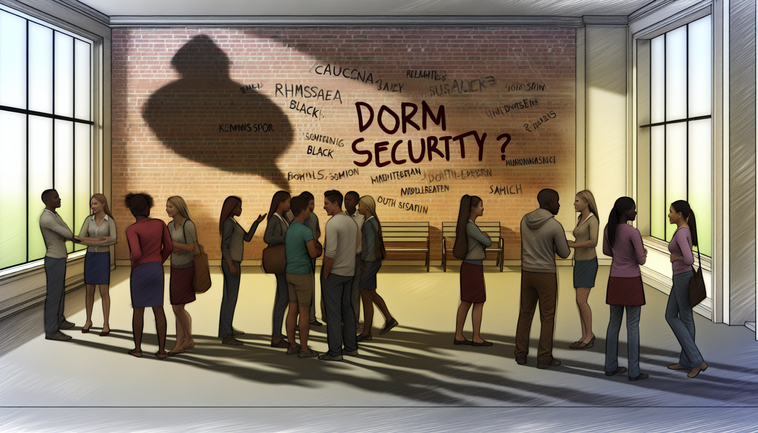
In the ever-bustling environment of college life, few things reverberate more than a rumor, especially when it pertains to safety. Recently, the AMR II dorms at Johns Hopkins University became the epicenter of a fervent discussion over dorm safety after rumors of a break-in involving a homeless woman surfaced. Such claims, although proven false, have spotlighted pressing student concerns over campus security and the University’s approach in fostering a safe living environment.
Initially, the chatter began with a seemingly alarming anonymous tip about the presence of an unauthorized woman who allegedly took refuge in the dorm’s basement. Although further investigation by The News-Letter revealed that this was an unfounded claim, the rumor vividly sparked debate on online platforms like Sidechat, illustrating the swift and wide-reaching nature of information and its impact on perceptions.
This unfolding narrative, despite being a fabrication, served as a catalyst for a broader discussion about student safety. Even fictional accounts can ignite real anxieties, as specific incidents can underscore latent fears among residents. Drawing from students’ voices, it’s evident that there exists a dichotomy in feeling both secure and wary within the same spaces, fueled partly by past isolated incidents and partly by common urban living challenges.
It’s clear that while the University boasts substantial security measures, such as guards and turnstiles, their success doesn’t merely hinge upon their existence but on proactive and consistent enforcement. As students like Lyla Urban suggest, incorporating simple yet effective safeguards, like keen visual audits, could bridge the gap between feeling safe and actually being safe.
The quest for a balance between accessibility and security goes beyond just physical safety. It encompasses ensuring environments conducive to peace of mind — where systems are both visible and functional. Feedback from surveys indicates that while students largely perceive their habitat as secure, there’s an expressed desire for enhanced clarity in communication about security measures and increased visibility of patrolling staff.
In constructing a resilient security apparatus, universities must not only understand the mechanics behind breaches but also dive into the perception of safety that their student body harbors. For many students, the knowledge that escape routes are well-lit and frequently patrolled is as crucial as the existence of a security presence, illustrating the nuanced layers of safety demands.
Ultimately, the informative wake of rumors at Johns Hopkins reflects a universal truth cherished by academic institutions: Safety transcends beyond measures into the realm of trust and assurance. Ensuring all voices are heard allows for the creation of an environment not only physically secure but also emotionally comforting, resonating with the ultimate mission of any educational institution — to nurture and protect its scholars.