






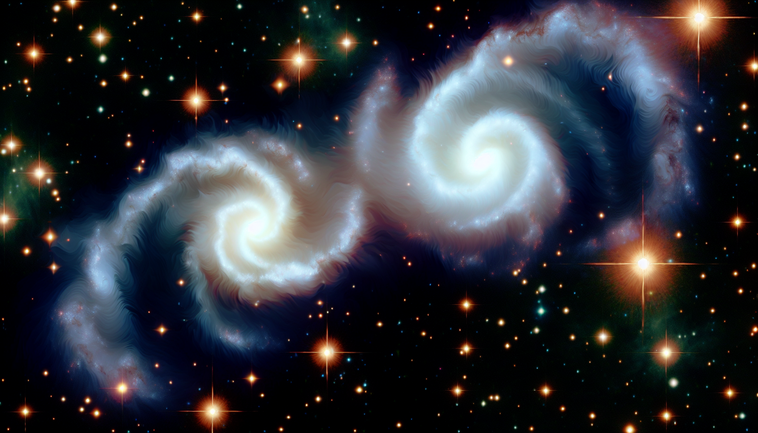
In a universe brimming with celestial wonders, the European Space Agency’s Hubble Picture of the Week has spotlighted the spiral galaxy NGC 4388, mesmerizing astronomers and space enthusiasts alike. This latest image showcases a captivating phenomenon—a stream of luminous gas flowing from the galaxy’s disk, sparking curiosity and questions within the astronomical community.
NGC 4388, located in the Virgo Cluster, is no stranger to scrutiny. However, the recent Hubble capture has provided a fresh perspective on this cosmic neighbor. Unlike the serene spiral arms typically associated with galaxies of its kind, NGC 4388 displays an energetic escapade, as jets of glowing gas spill into the vastness of space. This unforeseen spectacle has ignited a flurry of speculation and research as scientists endeavor to uncover the underlying causes of this celestial exhalation.
To the untrained eye, this may appear as just another pretty picture in Hubble’s extensive gallery. Yet, for astronomers, the observation carries significant implications. The streaming gas may indicate processes occurring within NGC 4388 that were previously masked or underestimated. Possible explanations range from intense star formation activities to the aftermath of galactic interactions, each offering a piece of the cosmic puzzle.
The intricacies of NGC 4388’s glowing gas stream prompt further investigation into the dynamic processes fueling such phenomena. High-energy events within the galaxy could be feeding these luminous jets, potentially linked to the voracious behavior of a supermassive black hole residing at its core. As matter spirals inwards, the resultant cataclysmic forces may be sending shockwaves across the galaxy, prompting dramatic visual manifestations.
Moreover, this vibrant spectacle serves as a reminder of how little we truly understand the lives of galaxies. While we possess models and hypotheses, discoveries like this challenge existing paradigms and encourage innovative thinking. Researchers are increasingly relying on collaborations and multi-wavelength observations to piece together the portrait of cosmic evolution displayed by such captivating astronomical events.
Astronomical pursuits often hinge on moments of revelation like these. As scientists dissect the data and draw comparisons with similar galactic phenomena, each finding becomes a stitch in the fabric of our understanding of the universe. NGC 4388’s glowing gas jets may eventually offer clues not only about its own narrative but also about the behaviors and histories of spiral galaxies at large.
As we stand on the precipice of these new revelations, one thing remains clear: the cosmos continues to astonish and inspire. The Hubble Space Telescope’s glimpse at NGC 4388’s ethereal ballet invites us to ponder the myriad processes at play in the universe. In this dance of light and matter, every discovery beckons us to look deeper, to question further, and to thrill in the relentless quest to comprehend the celestial symphony above.